

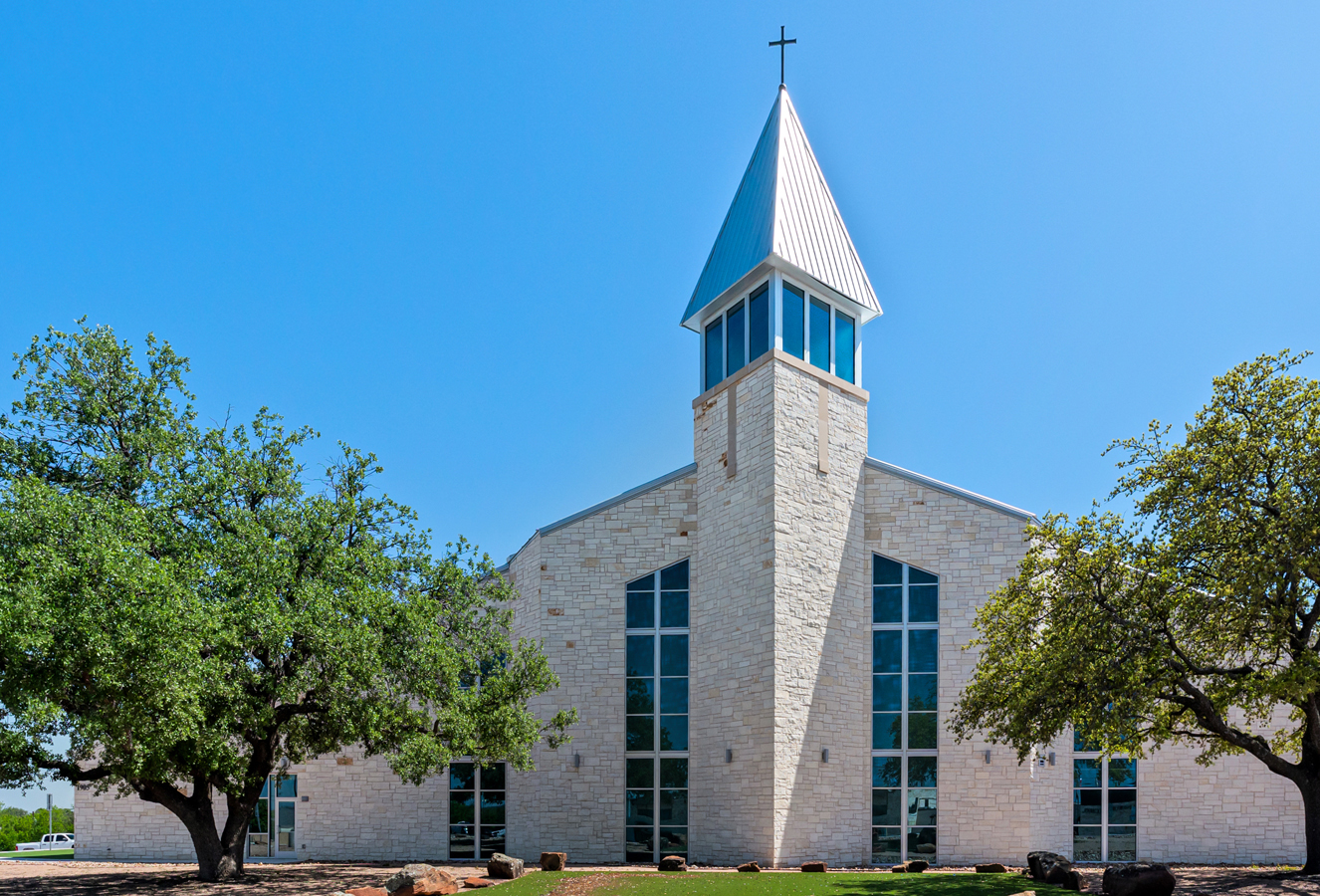
Most building committees start in the same place. You’ve got a growing congregation, a budget that answers to the people in the pews, and a stack of questions nobody on the committee builds churches for a living to answer. How big does the building need to be? What’s it going to cost, what material makes sense, and how long until the doors open?
This guide walks through those questions in roughly the order they come up, so your committee can plan with clear expectations before you ever request a quote. When you’re ready to talk specifics, our metal church buildings page covers how we design and deliver these projects.
Steel, Brick, or Wood: How the Materials Compare
Material is usually the first real decision. Brick and wood carry a traditional look that feels right for a house of worship, and for some congregations that history matters. Steel makes its case on different ground. It lasts longer, opens up the interior, prices more predictably, and goes up faster.
Steel doesn’t rot, warp, or attract pests, and it holds up to the wind, snow, and weather extremes that wear other materials down. It also does something brick and wood structurally can’t. Clear span construction opens the whole room, no interior columns breaking up the space. That’s what makes a sanctuary feel like a sanctuary, and it lets you lay out the interior around how your congregation gathers, not around where a support wall has to land.
And the look isn’t a tradeoff. A steel building takes a brick, stucco, or wood-look facade just fine, so the outside reflects the character you want while the structure underneath does the work steel is good at.
How Big Does a Church Building Need to Be?
Size has less to do with hitting a square footage number than with how your congregation actually uses the space. Worship seating is the starting point, but it’s everything around it that committees tend to underestimate. Gathering areas, classrooms, offices, storage. It adds up faster than you’d think.
As a rough reference, a 5,000 square foot footprint seats a few hundred people for worship, though real capacity comes down to your seating layout, aisle and accessibility requirements, and local occupancy code. If classrooms, offices, or a fellowship area share the roof, size for all of it from the start. Retrofitting later is the expensive way to do it.
The most useful thing a committee can do early is list every function the building has to serve, now and five to ten years out. That list drives the size far better than any standard floor plan.
Planning Beyond the Sanctuary
A church building is rarely just a worship space. Fellowship halls host meals, events, and community programs. Education wings grow with the ministry. Offices, nurseries, kitchens, and storage all want square footage, and each one comes with its own layout and structural quirks.
Clear span steel makes that kind of multi-use planning easier, because the interior isn’t locked into fixed column positions. You can configure the walls, and reconfigure them later, around how the building actually gets used. And if you think the ministry will grow, design for it now. Adding on is far simpler and cheaper when the original structure was built with it in mind.
Customization Options to Consider
Steel gives you a lot of room to customize, and the choices you make early shape both how the church looks and how it works. As you put together your spec list, here’s what’s worth weighing:
- Exterior facade: brick, stucco, masonry, or wood-look siding
- Open steeples and decorative structural elements
- Stained glass windows and custom entrances
- Skylights and natural light placement
- Energy-efficient insulation
- Acoustic and noise-reducing wall panels
- Flexible interior wall configurations
- Classrooms, nurseries, and Sunday school rooms
- Kitchen and fellowship spaces
- Lean-to additions for covered entrances or storage
- Framed openings, gutters, and downspouts
Open steeples and decorative facades especially add real engineering complexity, so put those on the table early.
What the Timeline Looks Like
Steel goes up faster than conventional construction. Components get engineered and fabricated off-site while site work happens in parallel, which compresses the schedule and cuts out a lot of the weather and coordination delays that stall a traditional build.
That doesn’t mean fabrication is the whole story. Design decisions, permitting, and site prep all factor in too. The committees that move fastest are the ones that settle the details before the steel is manufactured, instead of sorting them out on the job site after the fact.
What Drives the Cost of a Steel Church Building
There’s no single price for a church building. The cost follows the spec, and the spec follows what you’re actually building. A plain sanctuary with a standard facade is one number. Add an open steeple, a masonry exterior, a couple of education wings, and a full kitchen, and it’s a very different one.
What protects a congregation-funded budget isn’t a lower bid. It’s questioning the spec early, before the number is locked in.
When You’re Ready to Build
This guide is the planning side of it. When your committee is ready to talk through an actual project, our metal church buildings page lays out how we design and build them, and our case studies show how it’s gone for congregations we’ve worked with.
You don’t need a finished plan to start the conversation. Tell us what you’re building and we’ll tell you what’s possible.