

Built for the Equestrian Way of Life
Steel Riding Arenas
and Metal Horse Barns
Our equestrian division wasn’t built through advertising. It was built the way most things worth building get built: one conversation at a time, almost entirely through referrals. A rider tells a trainer. A trainer tells a facility owner. A general contractor in Wellington, Florida calls because someone they trust told them to.
That happened because of how we show up. Chris Glykas, VP of Sales of Coastal Steel Structures, has guided more equestrian projects than he can count. He answers questions, walks people through what they actually need, and stays involved long after most people would have moved on.
This part of our business runs almost entirely on repeat customers and referrals. That’s not an accident.
What we’ve built reflects that. From a personal roping academy in Comanche, Texas to Wellington International, the largest covered riding arena in South Florida, every project in this space came through a relationship. And every one of them had a hard date that couldn’t move, because in the equestrian world, a late building doesn’t just cost money. It costs the season.
What We Do
Steel Solutions for Covered Riding Arenas
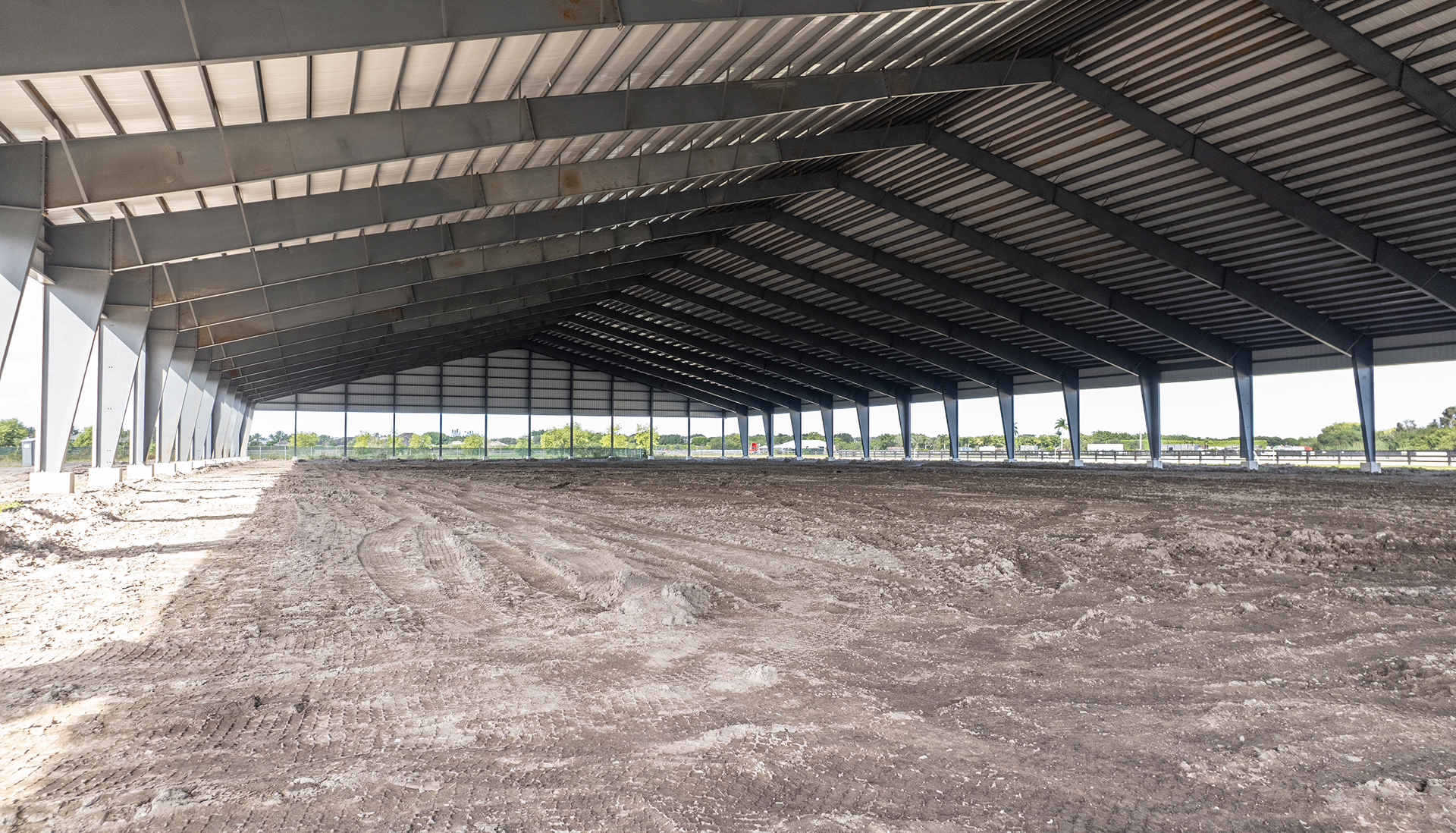
Covered riding arenas aren’t a standard build. Clear span requirements are non-negotiable. Columns in the wrong place aren’t a design inconvenience, they’re a safety issue and a functional failure. Height has to accommodate the discipline. Ventilation and site conditions matter in ways they don’t on a typical commercial job.
Pre-engineered metal construction is built for this. Faster to erect than conventional framing, engineered to your specific loads and local codes, and designed to flex as your operation grows. We work with general contractors, erectors, and owners to keep the steel side of these projects clean, so the building is never what throws off the schedule.
What We Do
COVERED ARENA BUILDING TYPES
Built for the Demands of the Sport
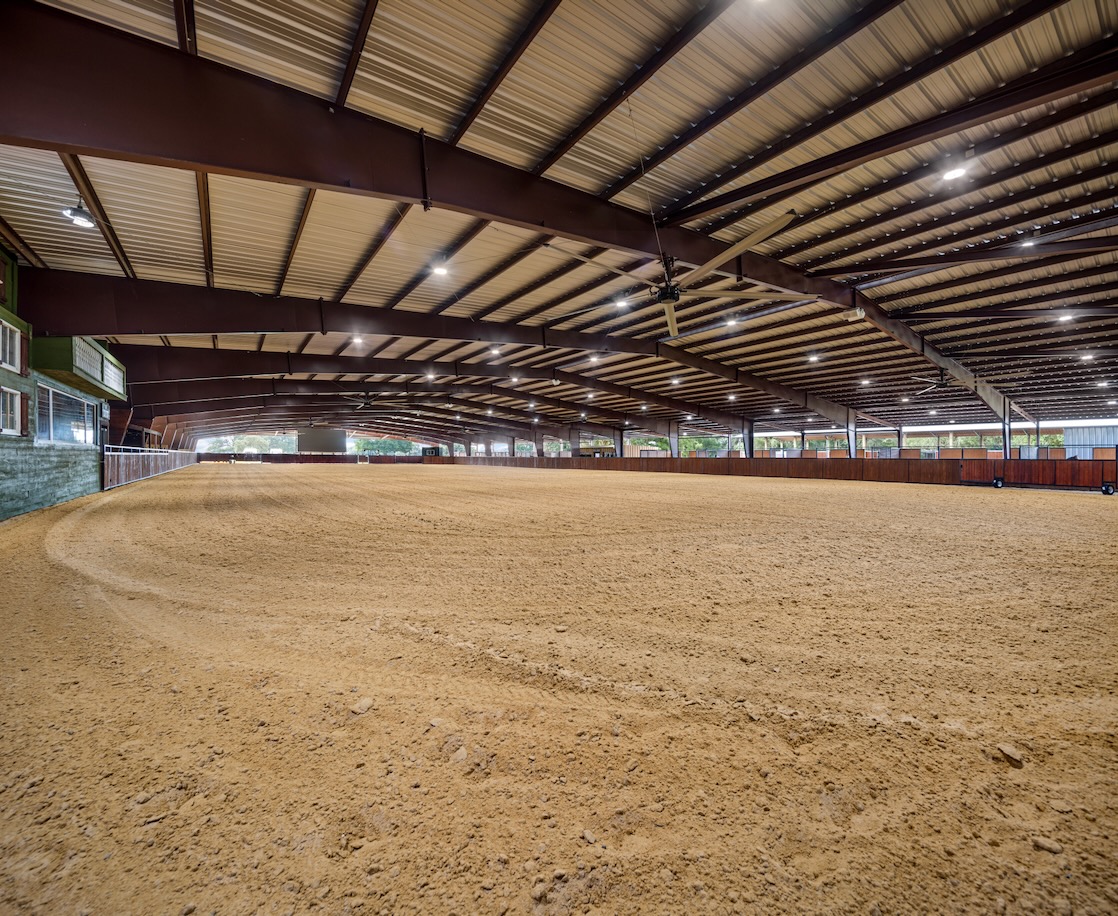
Competition arenas don’t have room for compromise. The clear span has to be right, the structural ratings have to hold up to local wind and weather requirements, and the build has to be executed cleanly around an active facility, because the event calendar doesn’t pause for construction.
We’ve delivered at that level. Our work at Wellington International produced an 86,000 square foot covered arena, the largest of its kind in South Florida, built on one of the most active equestrian properties in the world.
Construction ran alongside a full event calendar, daily operations, and a community that never really slows down. That’s the standard we hold ourselves to on every competition-level project we take on.
Spec It Right. Train Without Limits.
Training arenas have specific requirements that generic building specs miss. Clear span is the first conversation, not because it’s a preference, but because interior columns dictate where horses can and can’t go, and that directly affects what you can teach and how fast you can run them. Height matters too. A roping arena that’s too low isn’t a roping arena.
We built a 150x200x16 covered roping arena in Comanche, Texas for eight-time PRCA world champion Speed Williams, a facility designed around his training academy and the specific demands of team roping.
The clear span and ceiling height weren’t aesthetic choices. They were functional requirements, and we built to them. When a foundation engineering error set the project back two weeks, we absorbed the repair cost and kept it moving. That’s what accountability looks like on a project where the deadline matters.
One Structure. Works Every Day.
Working ranches need a covered arena that earns its footprint on competition days, on training days, and on the ordinary days in between. That means a structure designed around how the property actually functions: how horses and livestock move through it, how the layout supports daily workflow, and how the building holds up under steady use in demanding conditions.
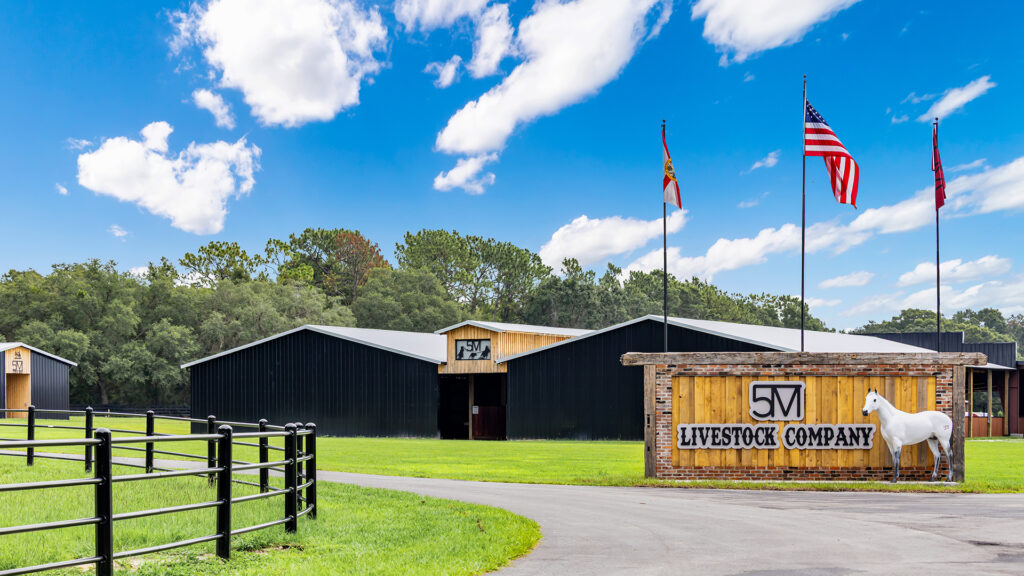
At 5M Livestock Company in Oxford, Florida, longtime horseman Steve Munz built a 140×320 roping arena designed for competitive performance and practical ranch use in the same structure. When the project hit a complication mid-build, we didn’t step back — we worked through it. Flexible terms, hands-on coordination, and a team that stayed engaged until the job was done. That’s what repeat business is built on.
What We’ve Built
Related Projects
5M Livestock Company
5M Livestock Company
Donato Farms
Donato Farms
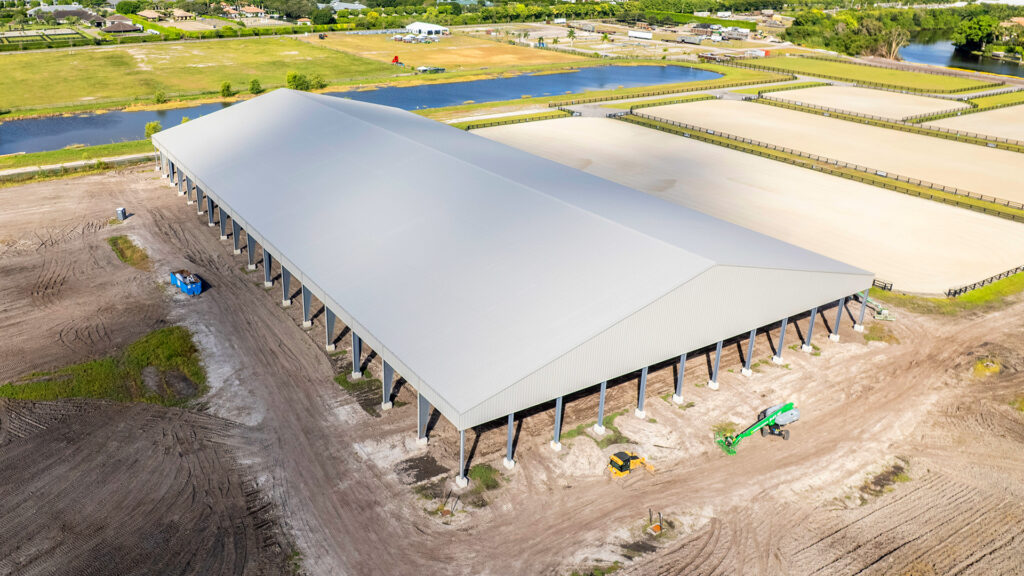
Wellington International
Wellington International
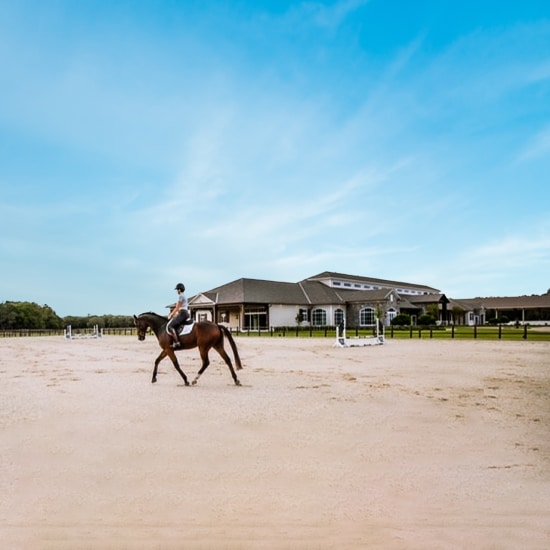
79x219x18 TerraNova Equestrian Center in | Myakka City, FL
79x219x18 TerraNova Equestrian Center in | Myakka City, FL
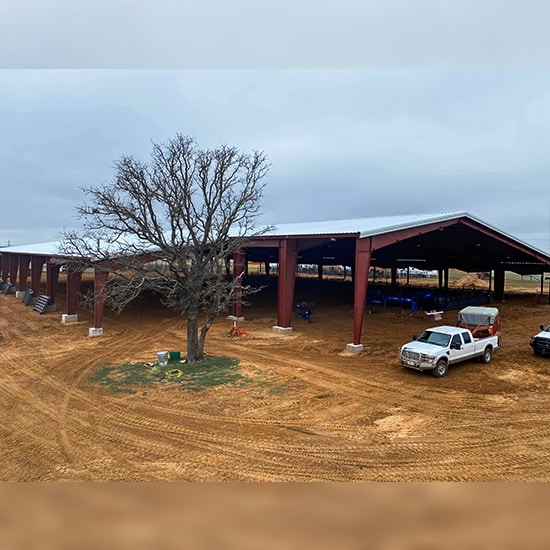
150x200x16 Covered Roping Arena | Comanche, TX
150x200x16 Covered Roping Arena | Comanche, TX
Equestrian Collateral
We’ve Got Answers
Frequently Asked Questions
What clear span dimensions do covered arenas typically require?
It depends on the discipline. Roping arenas need significant width to give horses room to reach speed and allow rope clearance overhead — and height matters as much as width in that application. Dressage and hunter/jumper arenas have different dimensional standards entirely.
We spec each building around the actual use, not a generic floor plan. Tell us what you’re training or competing in, and we’ll tell you what the structure needs to support it.
Can you hit a tight deadline before the season starts?
Timeline is one of the first things we ask about because a building that misses your window isn’t just a schedule problem; it’s a revenue problem. We source through a network of national and regional manufacturers, and regional suppliers can often move significantly faster when the calendar is tight.
If the deadline is achievable, we’ll tell you how. If it isn’t, we’ll tell you that too, before you’ve committed to it.
How do site conditions affect the project?
Site readiness is one of the most common variables that affects equestrian builds. Drainage, ground conditions, and site prep, including de-mucking, pumping, and grading, all need to be resolved before steel goes up.
That work typically falls outside our scope, but we’re used to coordinating around it. Get us involved early and we can help sequence the project, so site prep and steel delivery aren’t competing on the same schedule.
Do you work with general contractors on equestrian projects?
Yes. Most of our equestrian work comes through general contractors and erectors, including GCs active in South Florida’s equestrian market. We provide accurate lead times, multiple pricing options, and a team that stays engaged from first quote through delivery, so the steel package is never the variable that throws your schedule.
How does pre-engineered construction hold up in demanding climates?
Every structure is engineered to your site’s specific load requirements, including wind, snow, and seismic, and designed to meet local building codes. We’ve built in South Florida’s hurricane corridor, the Texas heat, and across 48 states. The building is specified for where it’s going, not pulled off a shelf and shipped.
Can a covered arena be expanded later if the operation grows?
PEMB are designed with future expansion in mind. If there’s a chance you’ll need to add length, additional clearance, or attached structures down the road, we account for that in the initial design so you’re not rebuilding from scratch when the time comes.

Get In Touch
Ready to Build Your Arena?
Whether you’re early in the planning process or working against a hard deadline, we know what these projects require and we know how to move. Tell us what you’re building and we’ll get to work.