

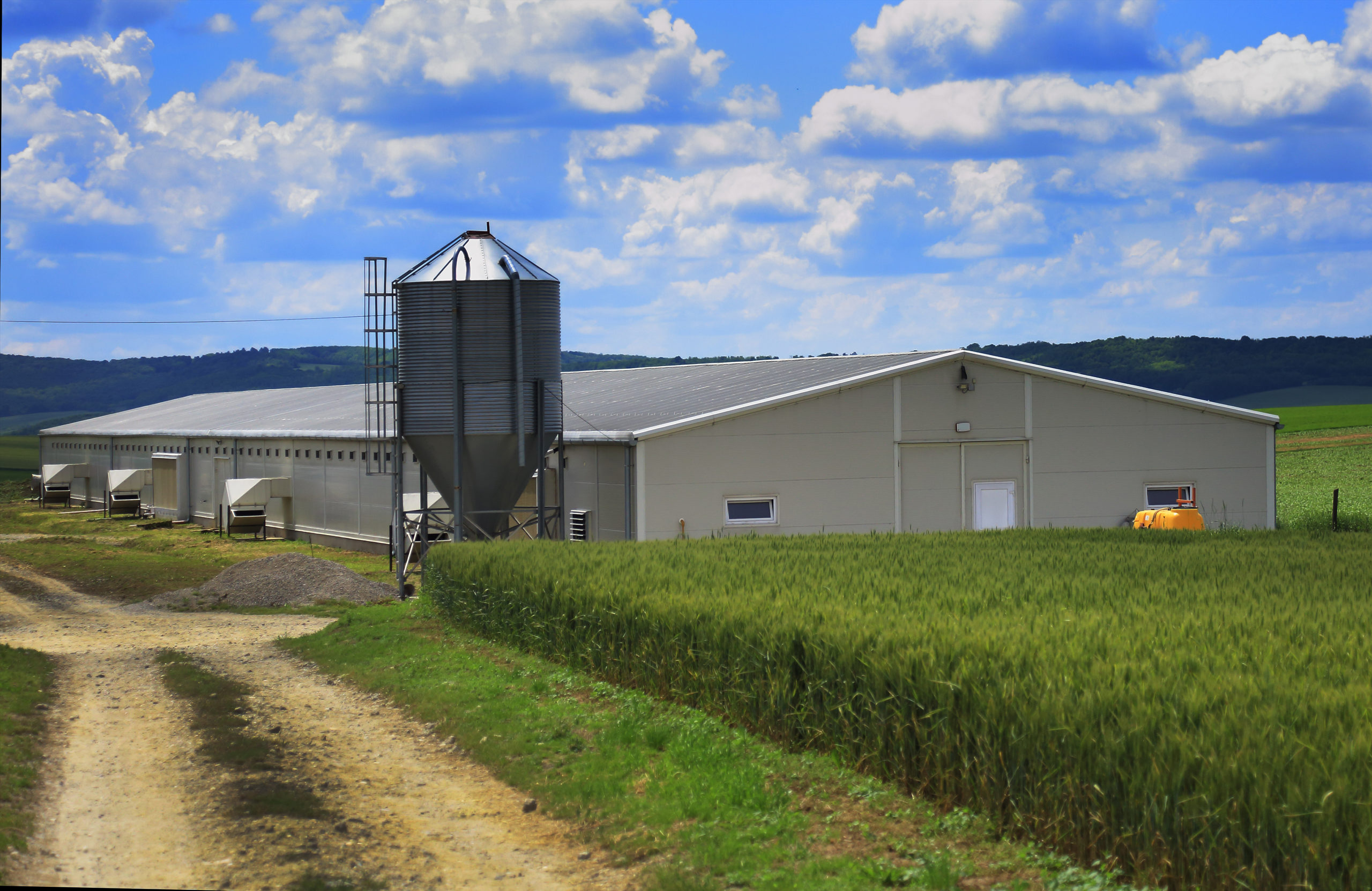
A working farm runs on buildings that have to hold up under real load and real weather. Equipment needs protection. Feed and grain have to stay dry, and livestock facilities carry requirements a standard building spec tends to miss. When one of those buildings comes in undersized, late, or wrong, the cost lands fast, and sometimes it lands on a whole season.
Steel agricultural structures are built for that. It goes up faster than conventional construction and takes the loads and conditions farm work throws at it. Clear span interiors mean you lay the building out around the operation, with no columns landing in the middle of a work area.
This guide covers the building types that make up a working farm, why operators keep choosing steel over wood, and what we settle before the steel is manufactured. If you already know what you’re building, our Agriculture page lays out how we work with operators, GCs, and erectors.
What Types of Steel Farm Buildings Are There?
Agricultural operations don’t share one profile. A row-crop farm needs different buildings than a cattle operation or a commercial processing plant. These are the types we deliver most.
Equipment and Machinery Storage
Tractors, trailers, harvesters, and implements are a big chunk of what a farm has tied up in equipment. They need protection from weather, theft, and daily wear, plus room for crews to get machinery in and out without a fight. We size the openings, clear span, and floor loads to the machinery you’re actually running and how it moves through the storage facility.
Hay, Feed, and Grain Storage
Hay, feed, and grain are inventory. Moisture, pests, or wind damage can turn that inventory into a loss in a hurry. We engineer feed and grain buildings with the ventilation, clearances, and structural ratings that keep the product dry and accessible while the structure carries a full bay.
Livestock and Animal Facilities
Barns, cattle facilities, and stables ask for things a generic spec skips: ventilation, drainage, interior layout, and a structure that takes a beating from the animals and the conditions both. We build those details in at the design stage, so the building supports the way you handle animals every day. For equine work specifically, our steel horse barns and covered riding arenas go deeper.
Workshops and Maintenance Buildings
A lot of the real work happens in the shop: welding, repairs, fabrication, the upkeep that keeps a fleet running. A steel building gives you clear span floor space with the height and door access heavy equipment needs, and it finishes out for year-round use. We build it for the work it has to hold.
Commercial Processing and Multi-Use Buildings
Bigger operations ask more of a building: wider spans, heavier floor loads, specific utility and ventilation needs. And plenty of farms need one structure that flexes, with equipment on one end, storage on another, and work space between them. We design around how the place actually runs, so it pulls its weight on the busy days and the slow ones.
Greenhouses and Controlled-Environment Structures
Steel framing handles larger, more complex growing structures than wood or conventional framing can, with better control over temperature and humidity. Its strength-to-weight buys you longer spans and more usable interior, and the frame shrugs off the moisture a growing environment puts out. We engineer each one to your site’s loads and climate.
Why Steel Beats Wood on a Working Farm?
Wood barns look the part, and they have for generations. They also rot, warp, draw pests, and need steady attention to keep standing the way you want them to. Over the life of the building, that gap shows up in maintenance hours, repair bills, and how long the structure actually protects what’s inside.
Durability
Steel takes the loads, weather, and wear a farm puts on it. It won’t rot or warp, it holds off pests, and with the right finish and sealant it lasts decades. You protect what’s inside it and quit paying to patch the building itself.
Speed
Components are engineered and fabricated off-site, so the building goes up faster than conventional construction with less time exposed to weather mid-build. When a seasonal window won’t move, that’s the kind of deadline steel can actually hit.
Cost Over the Life of the Building
Steel is competitive to put up and cheaper to keep, and that gap widens every year you own it. A seasonal check on fasteners, seals, and roof panels is usually the whole maintenance list.
Clear Span Flexibility
No interior columns means nothing dictates where stalls, bays, or equipment paths land. You set the interior up around the operation. And when you plan for growth up front, adding length or bays later is a straightforward addition rather than a teardown.
Get It Right Before the Steel Is Manufactured
The cheapest time to fix a farm building is before the steel is manufactured. Door sizes, clear spans, floor loads, ventilation, site conditions, all of it gets simpler and cheaper to resolve early and a lot harder once fabrication starts. That’s where we put the work, settling the spec with you so the building that gets erected is the one we designed.
Coastal Steel Structures has spent decades building agricultural steel across the country, working straight with operators, general contractors, and erectors. Tell us what you’re building and we’ll tell you what it takes.