

Most people who open a garden center start with the plants. That part usually works out. What catches people is everything around the plants: the site, the building, and cash flow through a year that has two strong quarters and two slow ones.
This is the next article in our How to Start a Business series. We have covered trampoline parks, indoor riding centers, and microbreweries. Garden centers have their own set of problems, and most of them are structural.
Nursery, Garden Center, or Market: Decide Before You Buy Land
These three businesses look similar from the parking lot and run nothing alike behind it.
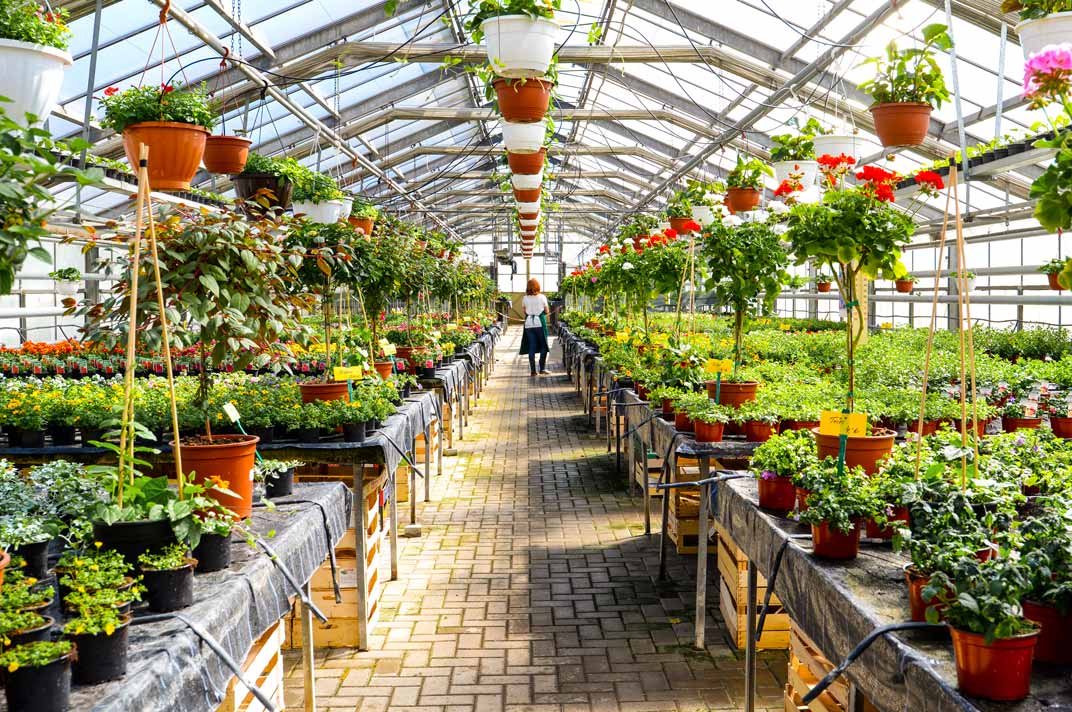
A nursery sells potted plants ready to transplant. Some focus on landscape supply and carry mulch, sod, brick, and water features alongside the stock. Others stay tight on seasonal produce starts. Either way, you are growing or holding inventory, which means you need land, water, and staff before you open the doors.
A garden center carries the plants plus tools, soil, chemicals, and equipment, usually with staff on hand who know what they are talking about. Delivery is common, which means trucks, a loading area, and somewhere to stage bulk material.
A community market flips the model. You own the structure and rent space to growers, artisans, and local vendors. Your revenue is booth fees instead of retail margin, and your payroll is a fraction of the other two. If you have more business sense than growing experience, this is usually the right call.
Pick one before you sign on a property. The three need different footprints, different parking, and different building configurations, and switching after the fact is expensive.
Where to Open It
Municipal landscaping contracts are worth chasing. Cities buy trees on a recurring cycle, and a single contract can carry a slow season. They are competitive, and they usually go to operators who can demonstrate volume and reliability, so plan on building toward one rather than opening with one.
Retail traffic still has to come from somewhere. Depending on the market, that is homeowners doing their own landscaping, HOA-managed communities, apartment property managers, or landscaping companies buying wholesale. Those buyers want different things and shop on different schedules. Know which one you are built for before you commit to a location.
Most garden centers make their margin on hardy, low-maintenance stock. Perennials and trees tend to carry the business. Add-on services like delivery, installation, and design work are where operators pull ahead of the competition down the street.
What It Costs to Open
Garden centers front-load expenses in a way most retail does not. You need staff before you have customers, because the land has to be prepped and the plants have to be cared for from the day they arrive.
Plan for:
- Real estate and site work
- Water, drainage, and irrigation infrastructure
- A retail building and covered or enclosed growing space
- Warehousing for soil, mulch, chemicals, and equipment
- Payroll ahead of opening
- Startup inventory
Site work is where budgets break. Garden centers move water constantly, and a site that does not drain properly turns into a maintenance problem that never goes away. Get a real drainage assessment before you close on the property.
The Building Decisions That Follow You for Twenty Years
The retail floor and the warehouse are two different buildings sharing one roof. Each has its own requirements, and most operators find that out after the concrete is poured.
The retail building needs to be open. Clear span construction gives you a floor with no interior columns dictating where displays, registers, and aisles land. That matters more in a garden center than in most retail, because your merchandising changes with the season and a column in the wrong place costs you square footage every quarter.
The warehouse side has to handle real weight and real traffic. Bagged soil and amendments on pallets carry serious floor load. Forklifts need clearance and turning room, and door openings have to accommodate whatever you are moving through them. These get spec’d wrong constantly, usually because someone sized the doors for a delivery van and not for a loaded pallet jack.
Steel handles the environment better than wood. Between irrigation, humidity, and fertilizer, a garden center is harder on a building than a typical retail space. Steel does not rot, warp, or attract pests, which is why it holds up where wood framing needs constant attention.
Build in the expansion now. Garden centers grow by adding covered display area, more storage, or a second warehouse bay. When the original structure was designed with that in mind, adding on is a straightforward extension. When it was not, it is a new project.
Coastal Steel Structures delivers commercial retail and industrial buildings and structures for agricultural operations across the country. We work with general contractors, owners, and erectors, and the details above are the ones we work through before the steel is manufactured.
Getting Customers Through the Door
Local flower shows, farmers markets, and home and garden events put you in front of the exact people who buy. Samples and giveaways work here in a way they do not in most retail, because a plant that survives in someone’s yard is a recurring customer.
Most homeowners need coaching on what to plant and when. That is an opening. Direct mail, seasonal planting guides, and a staff that answers questions well will build a customer base faster than advertising.
If you are opening a community market, your first customers are not the public. They are the growers and vendors who will rent your space. Visit local farms and operations directly and fill your booths before you announce an opening date.
Planning a garden center, nursery, or market and trying to figure out the building side? Tell us what you are working with and we will tell you what it takes. Call 888-492-5210 or get in touch.