

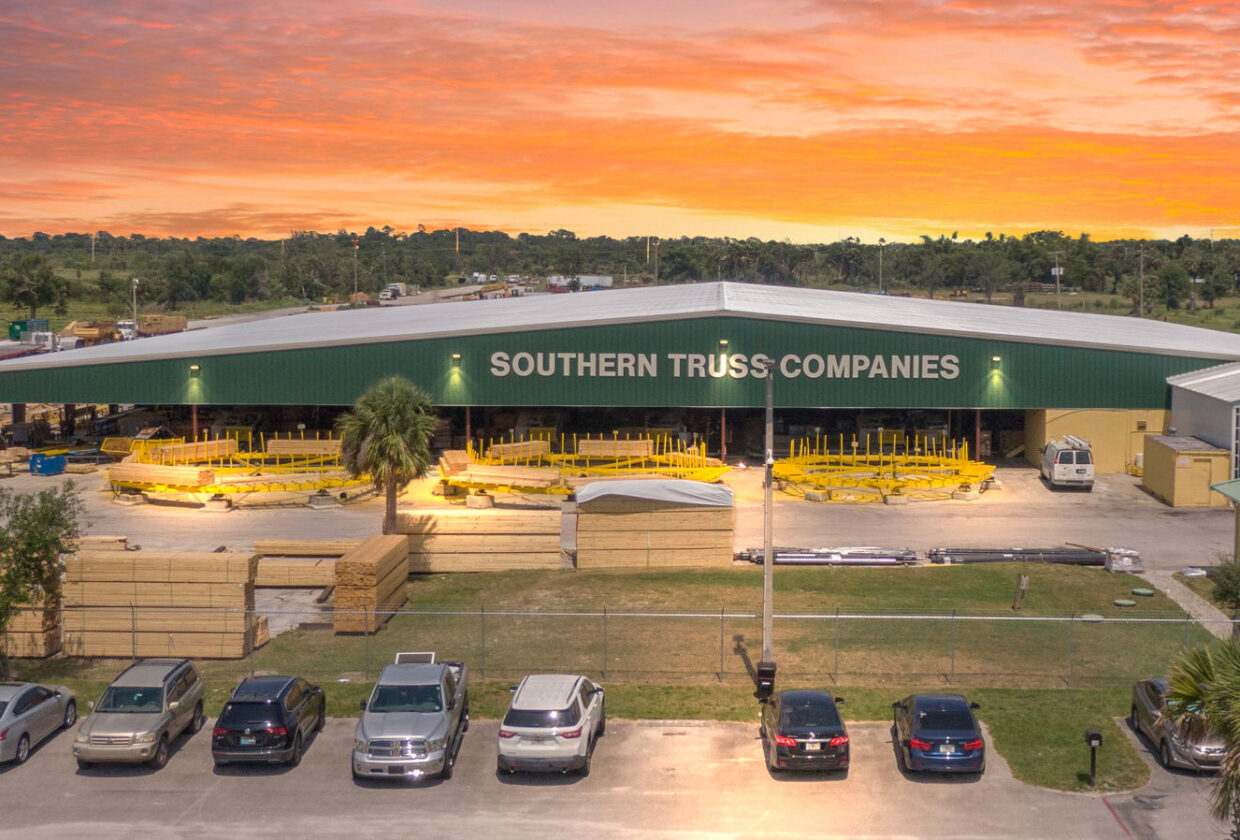
Rebuilt in 8 Weeks After Hurricane Milton
Building Overview
The concrete foundation was the only thing left standing.
On October 9, 2024, Hurricane Milton spun off a tornado that leveled Southern Truss’s 64,000 square foot fabrication plant in Fort Pierce, Florida. The original building, up since 2004, was gone. Equipment was damaged. Production stopped. Every day the plant stayed offline was a day of compounding losses in a business that runs on daily output, daily shipping, and customers who cannot wait.
Southern Truss is one of the major regional suppliers of prefabricated wood trusses to homebuilders across Florida. The rebuild had to match the original footprint exactly, clear a post-disaster permitting environment that was backlogged with every other rebuild in the region, and source structural steel during a period when supply across Florida was tight. We delivered the new 255x250x16 pre-engineered metal building in eight weeks. The standard timeline for a project of this scope is three months or more.
The Challenges
A Total Loss and Incomplete Documentation
The original 2004 facility was leveled. Nothing was salvageable. Documentation from the original construction was partial and in some cases no longer accurate to the layout the operation had evolved into over two decades.
Rebuilding a functional replacement without complete original drawings is its own engineering problem. Column positions, bay widths, and equipment paths had to be reconstructed from a combination of archived schematics, site measurements of the remaining foundation, and input from Southern Truss employees who knew how the building actually worked on a daily basis.
Daily Production Losses That Compounded Quickly
Every day the plant stayed offline, Southern Truss was absorbing production losses, missed shipments, and pressure on customer relationships that had been built over decades. The cost of delay was not abstract. It showed up immediately, and it grew every day the facility was down.
Speed was not a preference. It was the requirement the rebuild had to be designed around.
Steel Supply Constrained Across the Region
The weeks following Milton put serious pressure on structural steel availability across Florida. Every facility damaged in the storm was trying to source material at the same time. Regional mills and distributors were working through backlogs. On a normal project, constrained supply pushes the schedule. On a project where every day offline is compounding financial damage, constrained supply threatens the survival of the business.
Post-Disaster Permitting
Local permitting offices were processing every other rebuild in the region at the same time. Backlogs were real. Building codes had been updated since 2004, which meant the new facility had to comply with the current standard, not the one the original building was approved under.
Every one of those elements takes time. The project did not have time to take.
The Footprint Had to Match Exactly
The new building could not shift by inches. The equipment paths, staging areas, and loading sequences that Southern Truss had built two decades of daily operations around were tied to the exact dimensions of the original facility. A column in a new position or a bay width reduced by a foot would have forced the operation to relearn its own rhythm from scratch.
The rebuild had to restore the building Southern Truss knew how to operate inside — not a new one that happened to serve the same function.
Site Cleanup Still in Progress When Rebuild Began
When we mobilized, the site was still active with recovery operations. Damaged materials, equipment, and debris were being removed while the rebuild was getting underway. Construction had to run safely around ongoing cleanup, which required tighter coordination than a standard sequence would allow.
The Solutions
The design, materials sourcing, and permitting were run in parallel rather than sequentially. That was the single most important decision of the project. In a normal sequence, design clears first, then permitting, then sourcing, then construction. On a timeline where every day offline was compounding damage, sequential was not an option.
Field measurements confirmed the original layout down to the equipment paths. Advanced CAD modeling held the footprint exactly. Archived schematics and employee input filled the gaps where the original documentation was partial.
Materials were secured through our manufacturing network at a moment when regional supply was tight across Florida. A single-source supplier approach would not have worked for this project in this market. The network gave us options — different mills, different regions, different timelines — so the critical path could be maintained even as individual sources hit their own delays.
Permitting was handled directly by our project management team, working in-person with local officials to resolve code compliance questions as they came up rather than waiting for written responses that would have added weeks. Post-disaster permitting does not reward patience. It rewards presence.
Construction was phased to keep crews working safely around active recovery operations on the same site. Daily on-site meetings let the teams adapt to changing conditions. Weekly coordination with Southern Truss kept the internal team aligned on what the facility would look like when it came back online.
The Result
Southern Truss was back in production eight weeks after total loss. A rebuild of this scope under normal conditions takes three months or more. The facility matches the original footprint exactly. Equipment paths, staging zones, and loading sequences are restored. Production continuity was protected. Customer relationships held.
The new building also brings the facility current with code compliance standards that have evolved since the original was built in 2004. The structure is stronger than what was lost. The operation inside it is the one Southern Truss has been running for two decades.
A project like this is not won on the day it is finished. It is won in the decisions made in the first week, when everyone else is still figuring out whether the timeline is possible. We decided it was, and we planned accordingly.
Related Case Studies
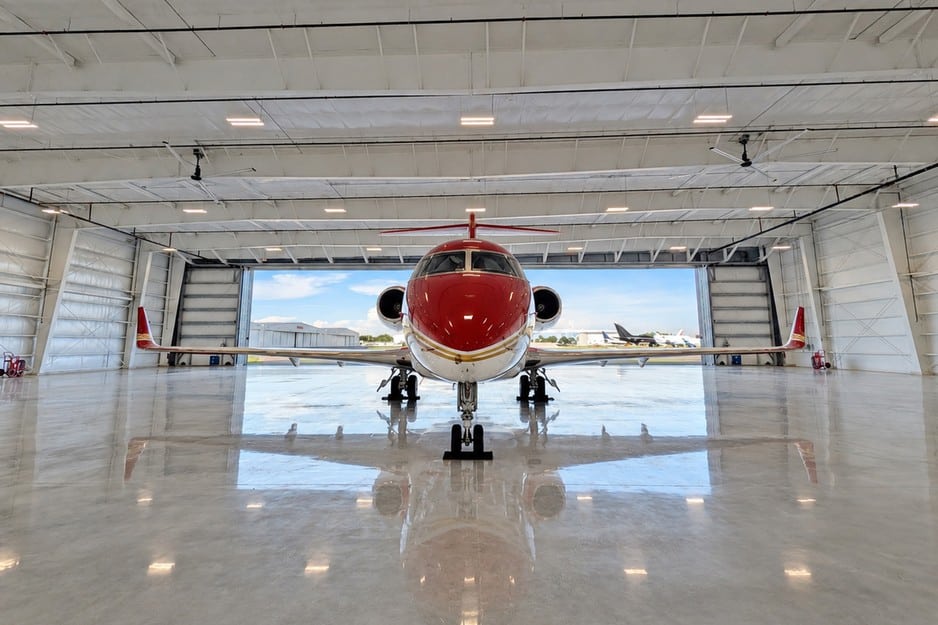
Skybridge: Engineering 10 Steel Aircraft Hangars for Miami-Dade’s Hurricane Zone
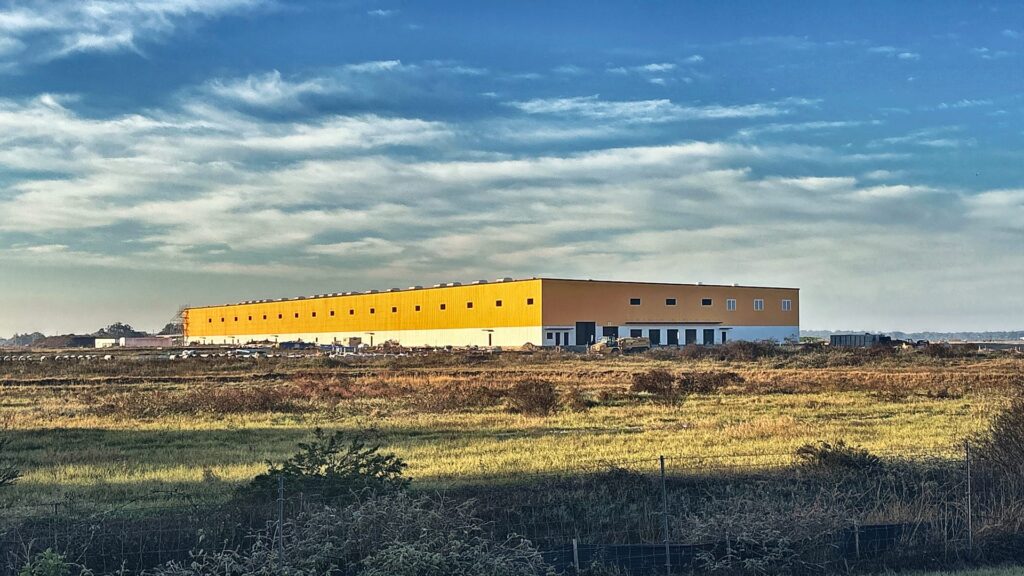
Bauducco Foods: A 159,900 SF Pre-Engineered Metal Building in Zephyrhills, FL
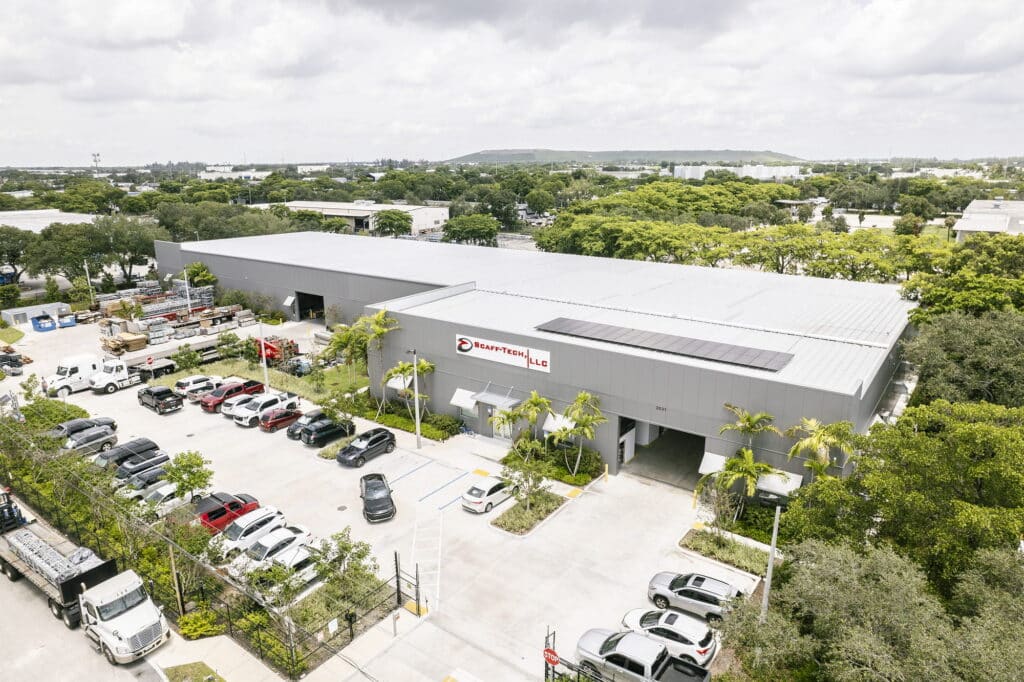
Scaff-Tech: A 54,720 Sq Ft Industrial Steel Building in Pompano Beach, FL
Proven Coast to Coast
Built on Trust. Proven by Repeat Business.
Our business wasn’t built on first impressions — it was built on repeat business. The contractors, architects, and erectors who choose us once tend to keep choosing us, and refer the ones who come after them.
That’s how a company rooted in South Florida ended up building in nearly every region of the country. Clear communication, honest guidance, and real accountability don’t just deliver a great steel building. They build the kind of trust that travels.