

A Foundation Error, a Cost We Absorbed, and an Arena Delivered on Time
Building Overview
Twenty-five percent of the concrete was already poured when the miscalculation surfaced.
The arena was being built for Speed Williams, an eight-time PRCA world champion in team roping, on his property in Comanche, Texas. The foundation design had been engineered by a third-party firm. The error was theirs. The cost to fix it was ours.
That decision is what this case study is about.
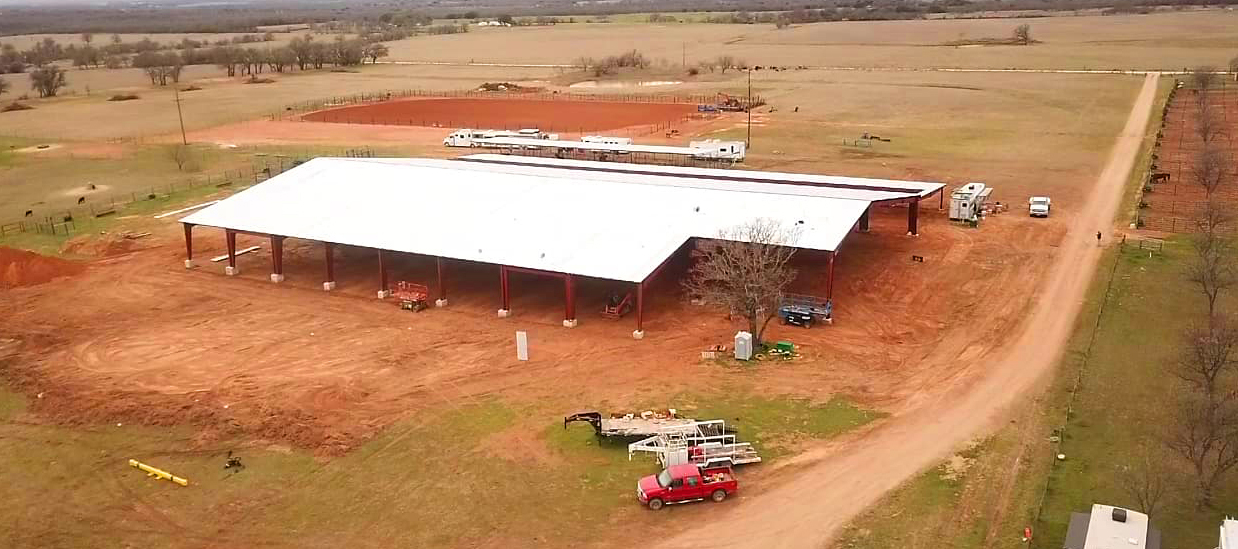
The Speed Williams Covered Roping Arena is a 150x200x16 I-Beam pre-engineered metal structure in Comanche, Texas, built to house Speed’s personal training and the ongoing programming at his roping academy. The clear span gives horses room to hit full speed without interior columns breaking the run. The sixteen-foot height gives ropers vertical clearance for a full throw. The stalls, veterinary and rehabilitation space, adjustable chutes, and video analysis setup inside the building are built around training at the level Speed has been operating at for three decades.
The Challenges
A Foundation Engineering Error Discovered Mid-Pour
A third-party engineering firm miscalculated the concrete foundation design. The error was not caught until roughly a quarter of the concrete had already been poured. On a wide-clear-span covered arena, foundation tolerances are not forgiving. The concrete already in the ground would not support the structure as designed.
The path forward had two versions. The industry-standard version passes the cost of the repair back through the chain: the engineering firm gets billed, the client waits while invoices sort out, and the project sits in a two-week holding pattern that can stretch further. The other version is somebody on the build side eats the cost, moves immediately, and sorts out the accountability after the project is back on track.
Performance Requirements That Did Not Leave Room for Compromise
The clear span had to be wide enough for horses to run without obstruction. The eave height had to support unrestricted rope throws. Neither of those is a design preference on a roping arena. They are the building. Underbuilding either would have produced a structure that looked like a roping arena without functioning as one.
Multi-Party Coordination Across Regions
The project involved Coastal’s team, T & C Metal Builders, Speed Williams directly, and the third-party engineering firm. Teams were operating across different time zones. A project of this complexity with that many stakeholders only holds together when the communication cadence is tight and every stakeholder is working from the same information.
The Solutions
The foundation error came down to a single decision. We covered the full cost of the repair. The third-party firm had made the mistake. The accountability question could have been litigated. It was not the right moment to litigate it. Speed’s training schedule, the academy calendar, and the construction sequence were all waiting on the answer, and the fastest answer was to absorb the cost and move.
That is the version of this story that matters to anyone thinking about hiring Coastal Steel Structures. The performance of a steel building partner shows up in the moments where the default response costs the client money and the right response costs the builder money. We made the call the first time, and we would make the same call again.
On the performance requirements, our engineering team worked directly with Speed and T & C Metal Builders to design the clear span and eave height the sport required, within the structural limits the I-Beam system supports. The final bid came in $10,000 under the lowest competing bid.
The savings were not pulled from the specs the facility needed. They came from working the design problem harder than anyone else had.
On coordination, we ran the communication cadence tight across the time zones involved. Every stakeholder worked from the same information. Every decision cleared before it could become a holdup.
The Result
The Speed Williams Covered Roping Arena was delivered on time and on budget, which on a project that lost two weeks to a third-party foundation error is its own measure of the work. The arena now serves as the daily training facility for an eight-time world champion and as the home of a roping academy that operates at the top of the sport.
In roping, the details of a facility are not incidental to the discipline. The width of the span changes what a horse can do. The height of the eave changes what a rope can do. A covered arena for a champion of this stature has to measure up to the sport he has spent his career defining. This one does.
Related Case Studies
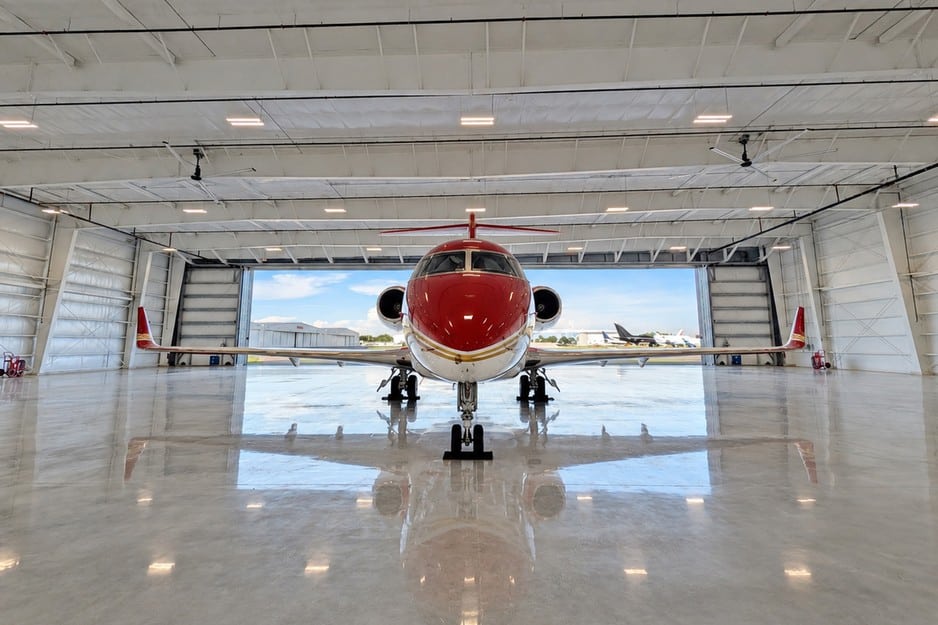
Skybridge: Engineering 10 Steel Aircraft Hangars for Miami-Dade’s Hurricane Zone
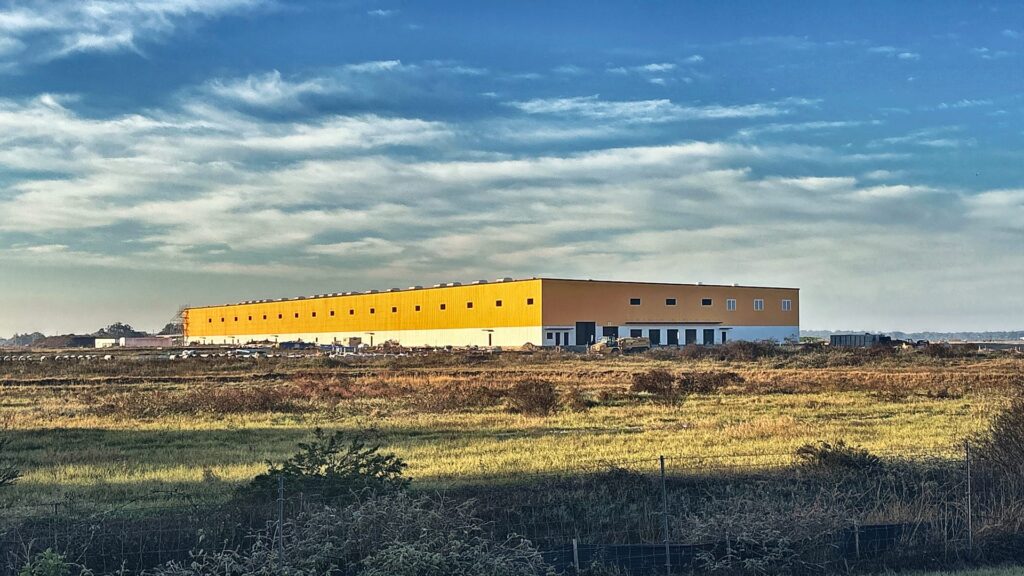
Bauducco Foods: A 159,900 SF Pre-Engineered Metal Building in Zephyrhills, FL
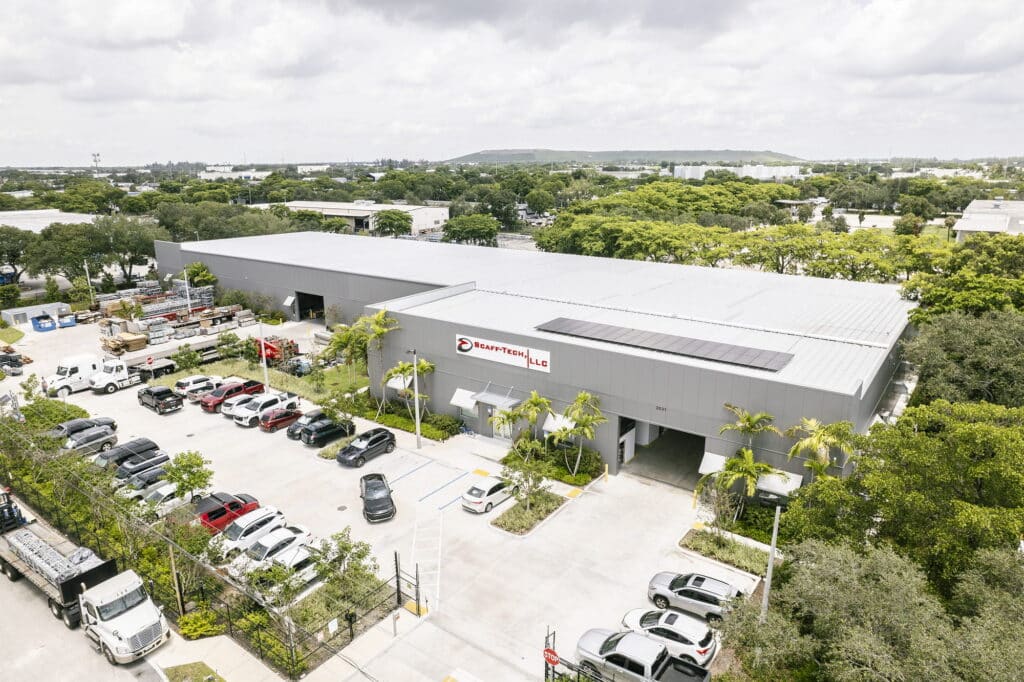
Scaff-Tech: A 54,720 Sq Ft Industrial Steel Building in Pompano Beach, FL

Proven Coast to Coast
Built on Trust. Proven by Repeat Business.
Our business wasn’t built on first impressions — it was built on repeat business. The contractors, architects, and erectors who choose us once tend to keep choosing us, and refer the ones who come after them.
That’s how a company rooted in South Florida ended up building in nearly every region of the country. Clear communication, honest guidance, and real accountability don’t just deliver a great steel building. They build the kind of trust that travels.